

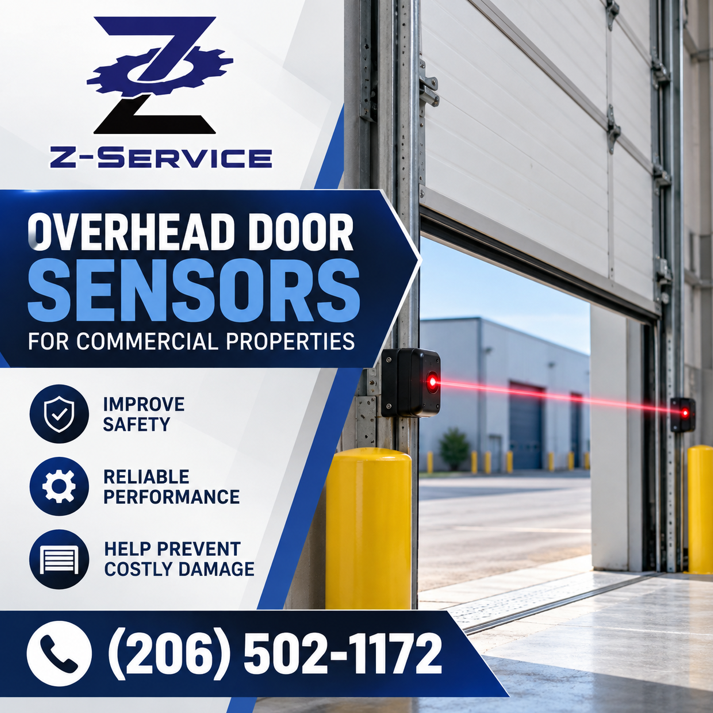
A commercial overhead door that refuses to close, reverses unexpectedly, or stops partway through its cycle can bring daily operations to a halt. In many cases, the door itself is not the source of the problem. Sensors and related safety components can interfere with normal operation when they become dirty, damaged, misaligned, or electrically compromised. For aread businesses experiencing inconsistent door operation, professional overhead door sensor repair can identify whether the sensor system is causing the failure and help restore safe, dependable access.
What Do Commercial Overhead Door Sensors Do?
Sensors are designed to detect obstructions and help prevent a powered overhead door from closing when a person, vehicle, pallet, equipment, or other object is in its path. Depending on the door and operator, the safety system may include photoelectric sensors, monitored safety devices, sensing edges, or other components.
When a sensor detects an obstruction or the operator cannot verify that the safety device is functioning correctly, the system may stop or reverse the door. That response can seem like a malfunction when the safety system is actually doing exactly what it was designed to do.
Problems begin when a sensor sends an incorrect signal or cannot communicate reliably with the operator. Professional commercial overhead door repair can help determine whether the issue originates with the sensors, operator, wiring, door hardware, or another part of the system.
Misaligned Sensors Are a Common Source of Trouble
Photoelectric sensors depend on proper positioning. If one sensor is knocked out of alignment, the beam may no longer reach its intended receiver. The operator can interpret that interruption as an obstruction and prevent the door from closing normally.
Commercial environments make accidental movement relatively easy. Carts, pallets, forklifts, cleaning equipment, deliveries, or routine activity near the doorway can bump a sensor or its mounting bracket.
Even minor movement can matter. A sensor does not necessarily need to look dramatically crooked to cause intermittent operation. Vibration from frequent door cycles can also contribute to mounting problems over time.
Dirt, Dust, and Moisture Can Interfere With Sensors
Commercial doorways are rarely pristine environments. Dust, mud, warehouse debris, vehicle exhaust residue, and other contaminants can accumulate on sensor lenses. When the lens becomes obstructed, the beam may weaken or fail.
Moisture creates another concern. Burien’s wet fall and winter weather can bring water, mud, and humidity into loading areas and commercial entrances. Sensors positioned near exterior openings may encounter conditions that contribute to inconsistent performance.
Recurring sensor problems deserve more attention than repeatedly wiping off a lens. Persistent failures may indicate damaged housings, deteriorated connections, mounting issues, or moisture affecting electrical components.
Wiring Damage Can Mimic a Bad Sensor
A sensor can be properly aligned and clean yet still fail because of its electrical connection. Loose terminals, damaged wiring, corrosion, pinched conductors, or deteriorated connections can interrupt communication with the door operator.
Wiring problems may produce intermittent symptoms. A door might operate correctly several times and then suddenly refuse to close. Movement, vibration, temperature changes, or moisture can make an already-compromised connection less reliable.
This is one reason guessing at the cause can waste time. An experienced technician can evaluate overhead door electrical problems along with the safety devices instead of assuming that the visible sensor needs replacement.
Why Does the Door Close Only When the Button Is Held?
A commercial overhead door that requires constant pressure on the close control may be indicating a problem with its monitored safety system, depending on the operator and configuration. This symptom should not be treated as an inconvenience to work around indefinitely.
The operator may not be receiving the expected signal from a required safety device. Possible causes include alignment problems, wiring faults, damaged components, or issues involving the operator itself.
A technician should determine why normal operation has changed rather than bypassing or defeating a safety feature. Restoring proper operation means identifying the underlying failure and confirming that the door’s safety components function as intended.
Sensor Problem or Mechanical Door Problem?
Not every door that reverses or stops has a sensor problem. Mechanical resistance can produce similar symptoms.
A damaged track, worn hardware, door imbalance, binding components, or an obstruction elsewhere in the system can affect movement. Operator settings or other electrical problems may also contribute.
Sensor-related problems often involve obstruction signals, inconsistent closing, unexpected reversal, or indications from the operator that a safety device is not functioning correctly. Mechanical problems may be accompanied by unusual noise, jerky movement, visible track damage, or changes in how smoothly the door travels.
A professional diagnosis helps separate these possibilities before unnecessary parts are replaced.
Frequently Asked Questions
Why does my commercial overhead door keep reversing?
A door may reverse because a safety sensor detects an obstruction, the sensors are misaligned or dirty, wiring is damaged, or another mechanical or electrical problem is affecting operation. Professional diagnosis can identify the specific cause.
Can weather affect commercial overhead door sensors?
Moisture, dirt, mud, and other contaminants associated with wet weather can interfere with some sensor systems, particularly around exterior commercial openings. Persistent problems should be professionally evaluated.
Why will my overhead door only close when I hold the button?
Depending on the operator and safety-system configuration, this behavior can indicate that the operator is not receiving the expected signal from a monitored safety device. Sensor alignment, wiring, components, and operator functions may need to be inspected.
Do malfunctioning overhead door sensors always need replacement?
No. Some problems result from misalignment, loose mounting hardware, contamination, wiring faults, or other system issues. A technician should diagnose the cause before determining whether replacement is necessary.
Why Sensor Problems Should Not Be Ignored
A commercial overhead door may control access to inventory, vehicles, equipment, loading areas, or secured sections of a building. When the door cannot close reliably, a relatively small sensor issue can quickly become an operational and security problem.
Repeatedly forcing operation or attempting to circumvent a safety system can create additional risks. Employees may also develop improvised routines around an unreliable door, increasing the possibility of inconsistent use or unexpected movement.
Businesses experiencing recurring failures should consider a commercial door safety inspection before a minor operational problem creates larger downtime. Prompt evaluation can also reveal whether the sensor issue is isolated or part of broader wear within the door system.
What Does Overhead Door Sensor Repair Involve?
Professional service begins with diagnosis rather than automatically replacing components. A technician may evaluate sensor alignment, mounting stability, lens condition, wiring, electrical connections, safety-device communication, operator behavior, and overall door movement.
If alignment or mounting is responsible, correcting the sensor position may restore operation. Damaged wiring or failed components can require repair or replacement. When the symptoms originate elsewhere, the technician can redirect attention to the appropriate door or operator component.
This approach can prevent unnecessary expenses. Replacing sensors that are not defective does little good when damaged wiring, a mechanical obstruction, or an operator problem is actually causing the failure.
When Should a Burien Business Call for Service?
A single obstruction-related reversal is not necessarily evidence of a malfunction. Repeated unexplained reversals, however, warrant investigation. The same applies when a door refuses to close despite a clear opening, operates inconsistently from one cycle to the next, or requires unusual control procedures.
Visible sensor damage, loose brackets, exposed wiring, moisture intrusion, and recurring alignment problems are also reasons to schedule professional service.
Facilities with heavily used doors may benefit from preventive overhead door maintenance because technicians can identify developing sensor, hardware, and operator concerns before they cause an unexpected shutdown.
Reliable Doors Support Reliable Business Operations
An overhead door is easy to overlook when it opens and closes correctly every day. Once it becomes unreliable, the effects can spread quickly through receiving, shipping, vehicle access, employee movement, and building security.
The goal is not simply to make the door move again. A commercial door should operate predictably while its safety systems continue performing their intended functions. Proper diagnosis is especially important when sensor problems are intermittent because the apparent failure may disappear temporarily without actually being corrected.
If your commercial door reverses unexpectedly, refuses to close, operates intermittently, or shows other signs that overhead door sensor repair may be needed, Z Service can diagnose the problem and recommend the appropriate solution. Burien businesses can call Z Service at (206) 547-1900 to schedule professional service before an unreliable sensor causes additional downtime or access problems.